- Home
- About Us
-
product
- Colour
- Black
- White
-
additive
- Anti-Slip Masterbatch
- Conductive Compounds
- Optical Brighteners
- Desiccants (Moisture Absorption)
- Flame Retardants Masterbatch
- Anti-microbial Masterbatch
- Nucleating/clarifier Additives
- Anti-statics Masterbatch
- Anti-block Masterbatch
- Polymer Processing Aids (PPA)
- Antioxidant Masterbatch
- Bio Digradeble Masterbatch
- Customised Additive
- special master batch
- application
- Quality
- Downloads
- Career
- Why Us?
- Contact

Rotational Moulding (Roto Moulding):
Rotational moulding is a manufacturing process used for producing hollow plastic products. It involves heating a thermoplastic material, typically polyethylene, inside a mold while rotating it bi-axially. As the mold rotates, the molten material spreads evenly, adhering to the inner walls of the mold, eventually cooling and solidifying into the desired shape. This process is ideal for creating large, seamless, and uniform products with complex shapes, such as storage tanks, containers, and playground equipment.
Blow Moulding:
Blow moulding is a manufacturing process used to create hollow plastic parts, typically bottles, containers, and other similar products. It involves melting plastic resin and then shaping it by blowing compressed air into a hollow mold cavity. The air pressure forces the molten plastic to expand and conform to the shape of the mold. Once cooled, the plastic solidifies into the desired product. Blow moulding is suitable for high-volume production of containers with consistent wall thickness and intricate designs.
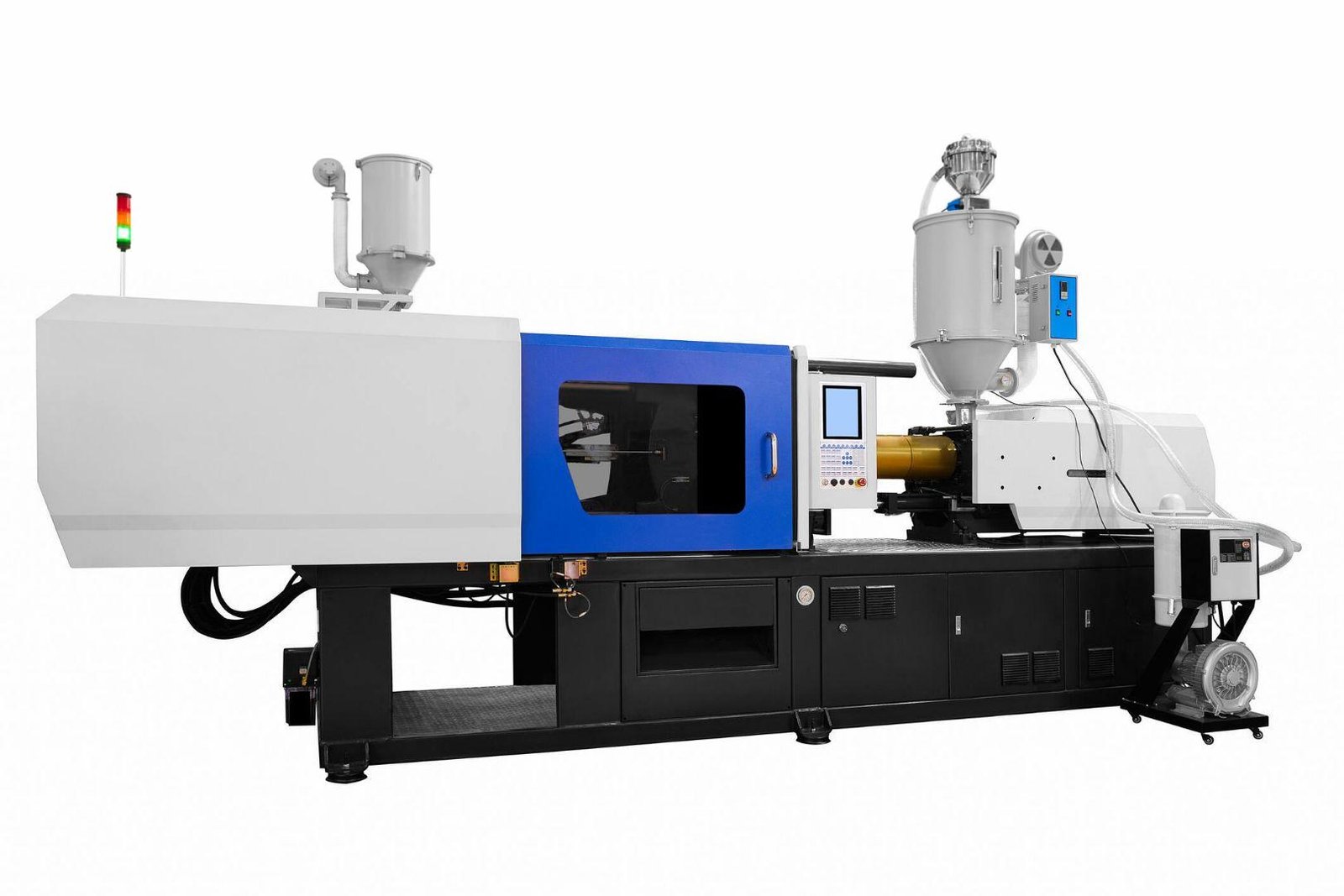
Injection Moulding:
Injection moulding is a versatile manufacturing process used to produce a wide range of plastic parts, from small components to large automotive parts. It involves injecting molten plastic material into a mold cavity at high pressure. The molten plastic fills the mold cavity, taking its shape, and then cools and solidifies, allowing the removal of the finished part. Injection moulding offers high precision, tight tolerances, and the ability to produce complex geometries with various materials, making it one of the most commonly used processes in the plastic industry for mass production.